
Window Tint in Navarre, FL: How to Choose the Right Shade
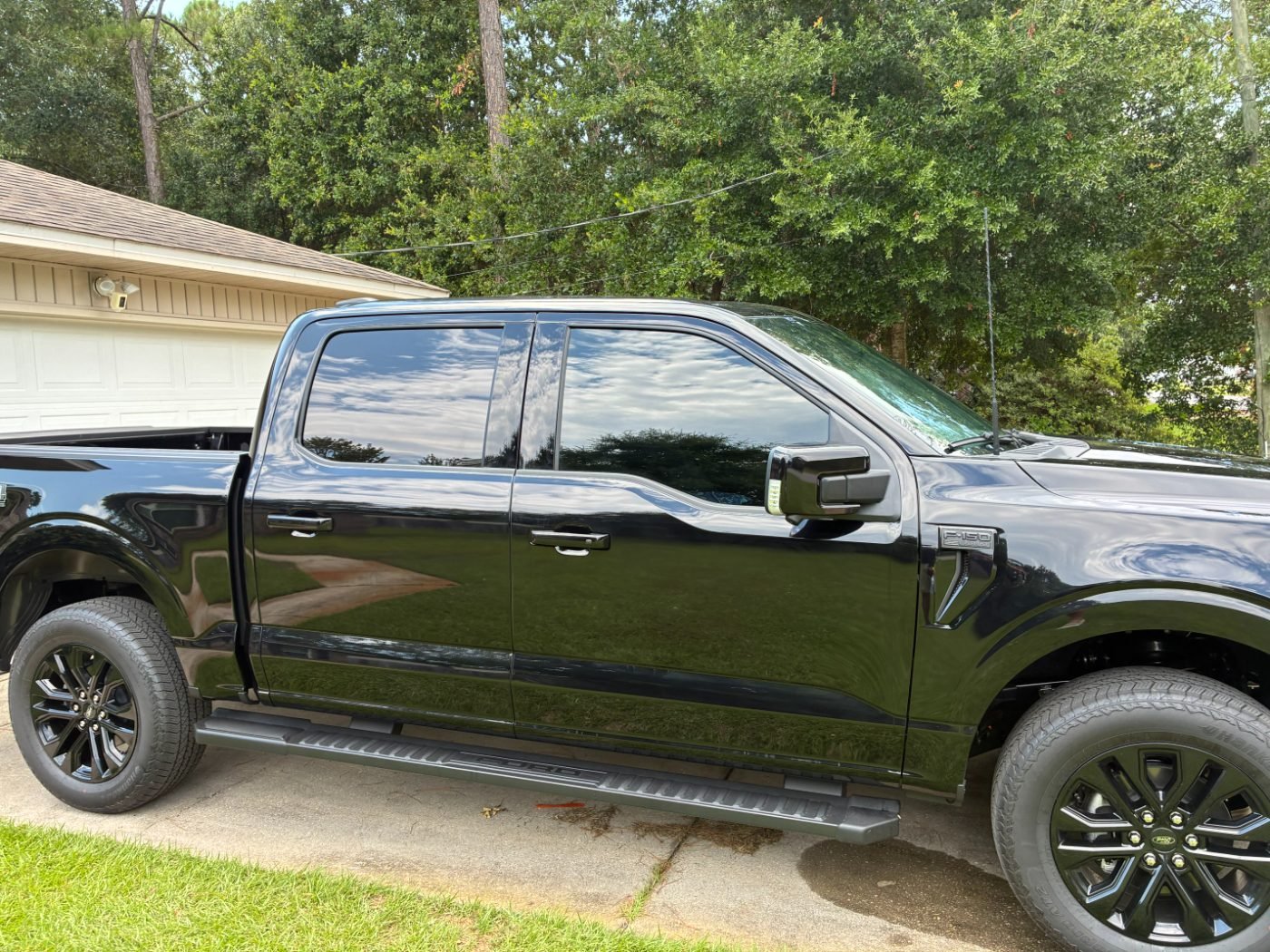
The same sun that makes Navarre worth living in is what cooks your dash, fades your seats and makes the drive down 98 at 5pm a squint-fest. Tint is the cheapest fix for all three. Here's how to pick the right one.
What tint actually does in a Florida summer
Three things, in order of what people notice first. It cuts heat, so the AC stops fighting a losing battle. It kills glare, which matters most on east-west runs like Navarre Parkway at sunrise and sunset. And quality film blocks 99% of UV, which is what saves your dash, door cards and leather from going chalky over a few Gulf Coast summers.
Privacy is the fourth benefit and the one people underrate. On a car it means nobody window-shops your center console in a beach parking lot. On a house it means you can leave the blinds open on the water side and still not feel on display.
Cars, homes and businesses want different film
Vehicles. Heat rejection and legal VLT drive the choice. Most Navarre drivers land on ceramic for the front two and something matched down the sides and back.
Homes. Residential film is about energy bills and fade protection on the sun-facing side of the house. West-facing sliders and any glass looking at the Sound are where it pays for itself fastest. We break the math down in our energy-savings post.
Businesses. Storefront and office film keeps interior temperatures even, protects merchandise and furnishings from fading, and takes the afternoon glare off screens. Details on our home & business tinting page.
The four film types, honestly compared
Dyed is the cheap option. It looks fine on day one, is non-reflective, and it is the film that turns purple and bubbles in a few Florida summers. It is what most $120 tint jobs use.
Metalized is durable and rejects heat well, but the metal particles can interfere with GPS, keyless entry, tire-pressure sensors and cell signal. Worth knowing before you commit.
Ceramic has no metal and no dye. It gives the best heat rejection at any given shade, keeps glass clear, and does not touch your electronics. It costs more up front and it is what we install most. Full comparison here.
Hybrid splits the difference — better than dyed, cheaper than ceramic, minimal signal interference. A reasonable middle if budget is tight.
Florida's legal limits, plainly
Front side windows must let in 28% or more visible light on every vehicle. On a sedan, rear sides and back glass must let in 15% or more. On SUVs, vans and trucks classed as multipurpose vehicles, rear sides and back glass can go to 6%.
Lower number means darker film. Officers here carry meters and do use them. Anyone who offers to put 20% on your front doors is offering you a ticket. Full breakdown of the 2026 law, fines and medical exemptions.
How to judge a tint shop
Ask for the film's TSER — Total Solar Energy Rejected — off the manufacturer spec sheet. It is the honest heat number. A shop that only says "99% heat rejection" is quoting one infrared wavelength and hoping you don't ask.
Get the warranty in writing and check that it covers bubbling, peeling, cracking and fading. Ask whether the person quoting you is the person installing. Ask to see recent local work — actual driveways in Navarre, not stock photos of cars that were never here. We wrote five questions worth asking any installer, including us.
What the install actually looks like
We come to you — driveway, office lot, wherever the vehicle is. Glass gets cleaned and decontaminated first, because film only bonds to genuinely clean glass. Each piece is cut to your exact window, applied, and squeegeed out. Then we walk the vehicle with you and check every panel.
Plan on two to four hours for a full car. Leave the windows up for two to three days while it cures — a little haze or a few small water pockets in that window are normal and clear on their own. More on curing here.
Keeping it looking new
After the cure, clean with a soft microfiber and any ammonia-free glass cleaner. Ammonia breaks down the adhesive and the dye. Skip abrasive pads and scrapers. That is genuinely the whole maintenance routine — good film on clean glass, installed properly, lasts as long as you own the vehicle.
Frequently asked questions
What is the darkest legal tint in Florida?
Front side windows must let in at least 28% of light on every vehicle. On sedans, the rear sides and back glass must let in at least 15%. On SUVs, vans and trucks classed as multipurpose vehicles, the rear sides and back glass can go as dark as 6%.
Is 35% or 20% tint darker?
20% is darker. The number is how much visible light the film lets through, so lower means less light, more privacy and more heat control. 20% is not legal on front side windows in Florida.
Do police pull people over for tint in Florida?
Yes. Florida officers carry tint meters and can stop a vehicle they believe is over the limit. Staying at or above the legal VLT for each window is the only reliable way to avoid a citation.
Is 20% tint illegal in Florida?
It depends on the window. It is illegal on front side windows, which need 28% or more. It is legal on the rear sides and back glass of a sedan, which allow 15%, and on multipurpose vehicles, which allow 6%.
Keep reading: Window Tint Prices in Navarre, FL: Every Package, No Surprises · Mobile Window Tinting in Navarre, FL: How Driveway Installs Actually Work · Ceramic vs. Carbon vs. Dyed Tint: What Actually Matters in Florida Heat
Full details on our mobile window tinting in Navarre, FL — mobile install, no travel charge, lifetime warranty.